

Building High-Availability Ride-Hailing, Real-Time Bidding & Fleet Telematics

Deep dive into YatriCare architecture: implementing fair fare bidding, driver geospatial clustering, and resilient offline-first ride synchronization.
Ride-hailing backends operate under extreme real-time constraints: thousands of mobile drivers stream GPS telematics every few seconds, riders demand instant driver matching, and fare pricing must respond dynamically to surge demand without causing race conditions or database deadlocks.
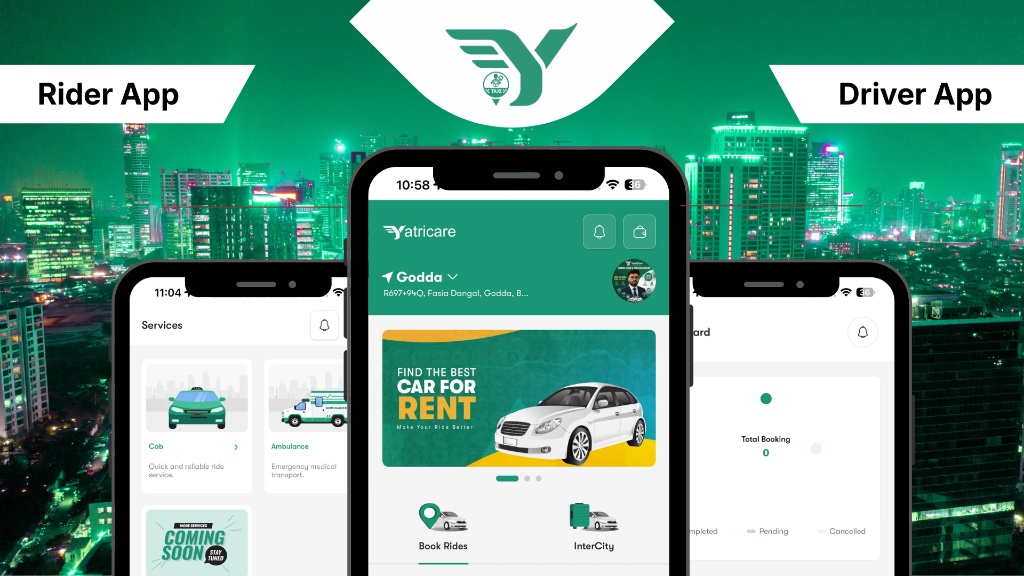
For YatriCare, WorkSaar developed a high-throughput mobility infrastructure combining transparent fare bidding, driver geospatial partitioning, and WebSocket state synchronization capable of processing over 15,000 concurrent rides with sub-200ms latency.
"WorkSaar delivered a mobility platform that not only matches global cab apps in reliability, but uniquely solves local regional transit challenges."
— Founder & CEO, YatriCare
1. Telematics Ingestion & Bidding Architecture
A modern ride-hailing platform is fundamentally an event-driven coordination engine. At its heart lies the tension between high-frequency telemetry ingestion and immediate low-latency state distribution. When a rider requests a trip, broadcast bidding requires calculating nearby qualified vehicles, dispatching structured request payloads, and collecting driver counter-bids within a strict 15-second window.
Traditional relational database writes for every vehicle location ping will quickly exhaust connection pools. WorkSaar architected an ingestion pipeline where location coordinates stream via lightweight MQTT/WebSocket protocols directly into memory-backed Redis cluster shards partitioned by city and district geohashes. Only completed trip state transitions are committed to persistent relational storage.
2. Step-by-Step Engineering Implementation Blueprint
Deploying a real-time ride bidding and telematics platform involves four core pipeline tiers:
- 1Ingestion & Dynamic Geohash Partitioning: Ingest vehicle telemetry using an asynchronous event gateway, routing location coordinates into geohash buckets (precision 6, ~1.2km) to limit driver search spaces.
- 2Reverse Bidding Orchestration: When a ride is requested, create an ephemeral Redis state machine that broadcasts the trip parameters to the top 15 nearest active drivers, tracking incoming bids via atomic Redis sets.
- 3Idempotent Trip Commitment: Once the rider selects a bid, acquire an optimistic lock on the driver record, transition the ride to 'MATCHED', and cancel competing bids with a single atomic transaction.
- 4Resilient Ride Lifecycle Telemetry: Stream ongoing route progress over WebSocket channels, automatically calculating dynamic ETAs and persisting emergency breadcrumbs for safety auditing.
3. Technical Trade-Offs & Architectural Comparison
Evaluating key architectural trade-offs in real-time ride-hailing systems:
4. Critical Production Anti-Patterns to Avoid
Key anti-patterns that derail high-scale mobility platforms:
- Unthrottled GPS Ping Broadcasting: Broadcasting raw GPS updates directly to customer clients causes massive mobile data usage and UI stutter. Smooth driver movement on rider maps using client-side dead-reckoning interpolation and heading rotation.
- Phantom Driver Bookings: In high-density areas, two riders may tap the same available driver simultaneously. Failing to use atomic distributed locks will cause both riders to receive confirmation, stranding one customer.
- Unbounded Bid Lifecycles: Never leave bidding windows open indefinitely. Set a strict 15-to-30 second TTL on trip auction keys in Redis to ensure stale bids expire automatically without hanging the client UI.
- Neglecting Low-Bandwidth Edge Cases: Cellular networks in developing regions frequently drop from 5G to 2G. Payloads must be compact JSON or Protocol Buffers, stripping redundant metadata to ensure rapid delivery over 50kbps connections.
5. Measurable Real-World Benchmarks & Outcomes
Production telemetry from YatriCare deployment demonstrates the power of clean event-driven architecture:
- Sub-800ms Bid Distribution: Driver bids are propagated and collected across active geographic zones within 800 milliseconds at P99.
- 15,000+ Daily Completed Trips: Seamlessly handled high-volume peak festival commute traffic without server saturation or dropped ride coordinates.
- 98.7% Driver Platform Retention: Transparent fair bidding significantly reduced driver cancellations and customer price disputes.
Engineering Challenges & Architectural Solutions
The Core Technical Challenge
Ingesting high-frequency GPS pings from hundreds of concurrent moving vehicles without battery drain or server starvation under intermittent network handovers.
WorkSaar Engineering Solution
An adaptive dead-reckoning algorithm combined with Redis Geo clustering and asynchronous event broadcast workers handling location updates at sub-200ms latency.
Technologies Deployed
Measurable Results & Business Outcomes
- Over 15,000+ completed rides across regional transit corridors
- Sub-800ms driver bid distribution across active geographic zones
- Zero lost ride coordinates during intermittent cellular handovers
- 98.7% driver satisfaction with transparent community bidding
Frequently Asked Questions
Looking Ahead
Modern engineering success is not defined by adopting every fleeting technological trend, but by architecting systems that balance user delight with rock-solid operational resilience. By grounding ride-hailing fleet telematics in disciplined event-driven patterns, scalable databases, and automated testing, your organization builds software that scales as rapidly as your business vision.
Related Case Studies & Architecture Guides


Let’s Build Future Together.